

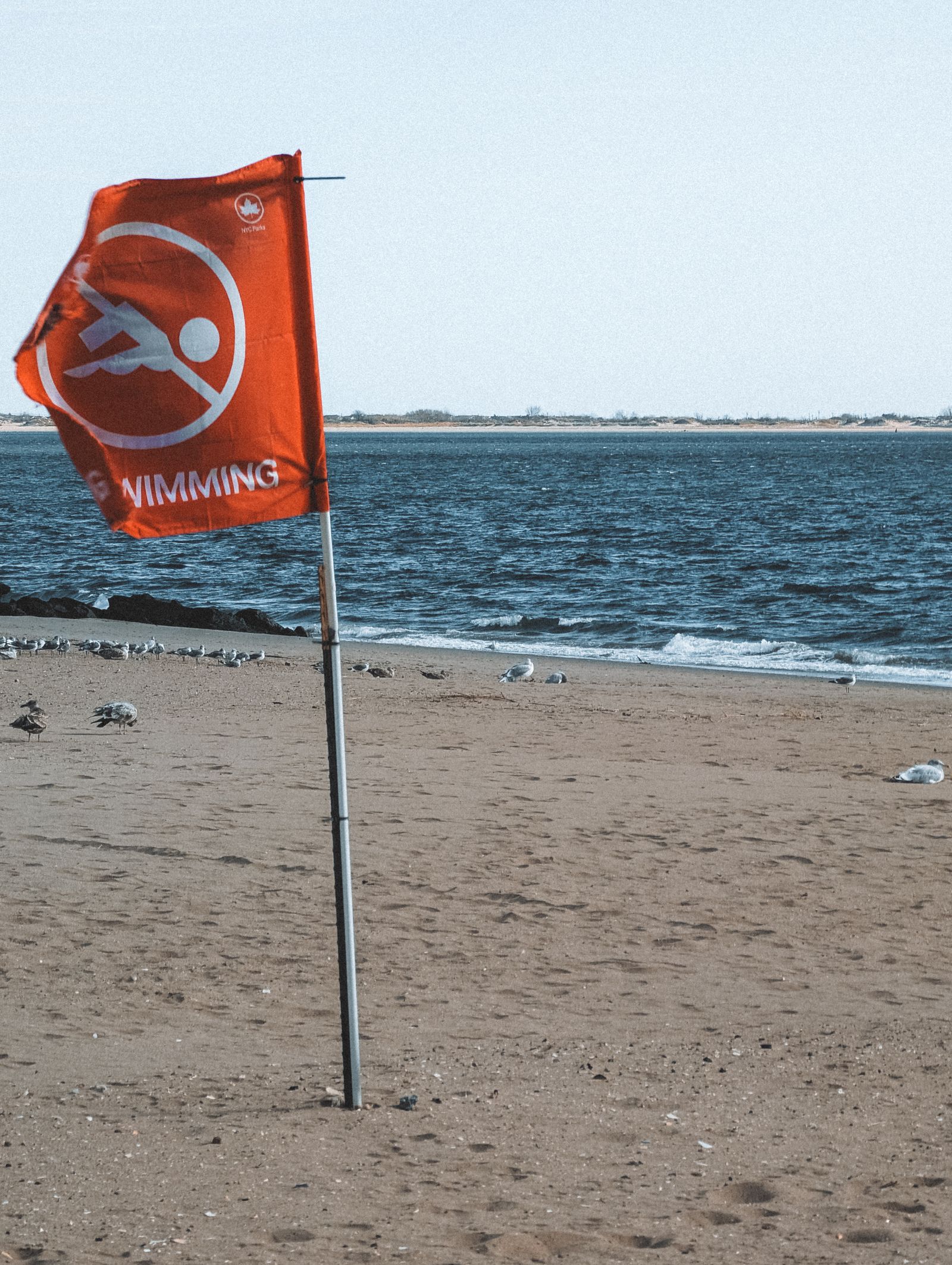
The resort photos show a quiet turquoise beach. Then you arrive, and there’s a red flag planted in the sand, and a staff member asking you to sign a waiver before you go in past your knees. Nobody mentions that part in the brochure.
We think somebody should. A lot of Mexico’s most famous beaches are rough for a good part of the year, and a few are barely swimmable at all. That doesn’t make them bad vacations. It just means the ocean is a different thing at different resorts, and you deserve to know which version you’re booking. Here’s how the flag system works, what the currents do, and where the water is calm enough for a real swim.
Why some resorts hand you a waiver
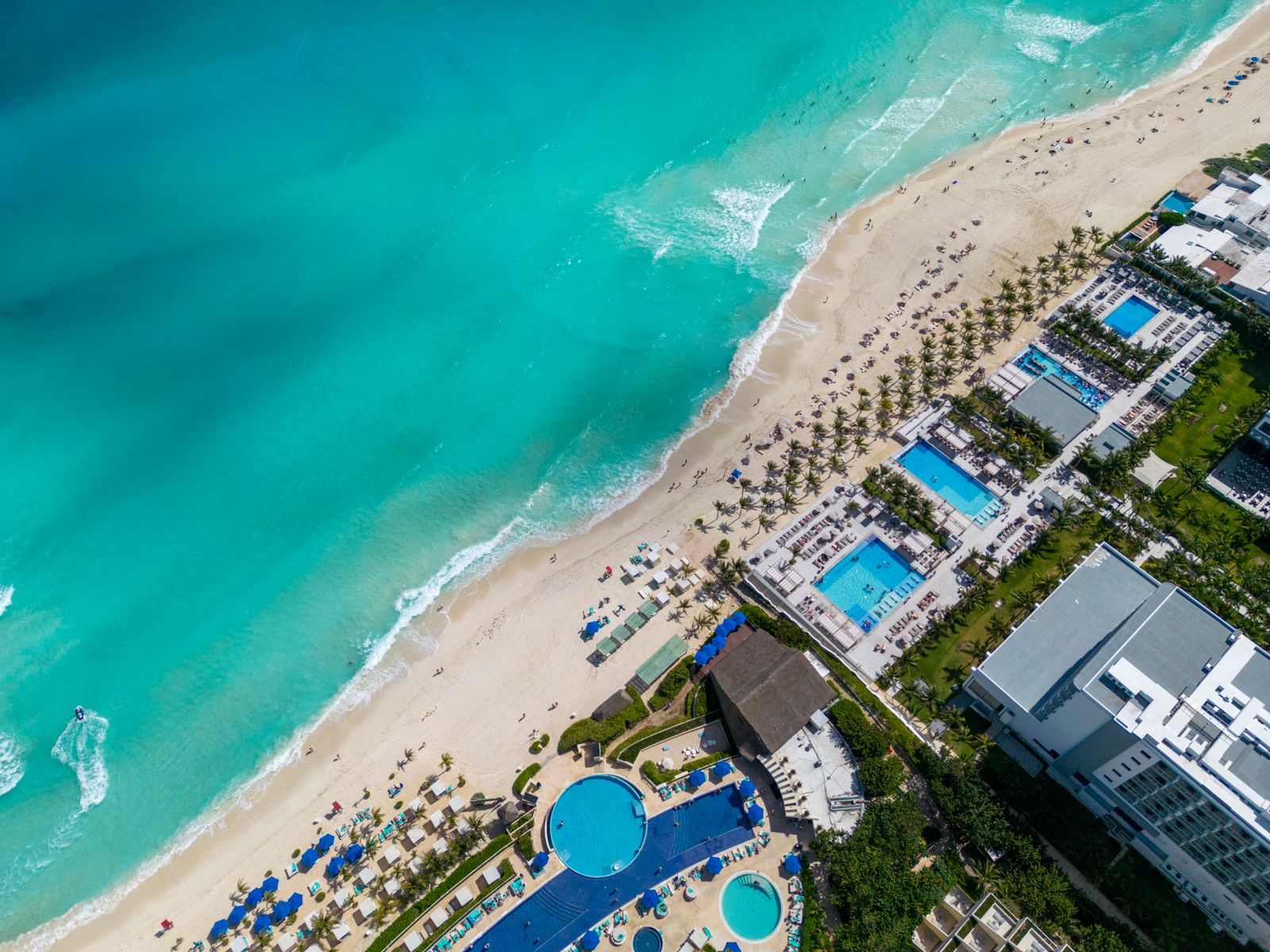
Many all-inclusives in Mexico sit on open-ocean coastline. The beach is beautiful to look at, but the water in front of the resort can run strong currents for days at a time, and lifeguard coverage in Mexico is thin outside the main public beaches. So resorts protect themselves. Some rope off their swim zones, some close the beach outright on rough days, and some ask guests to sign a waiver acknowledging they’re swimming at their own risk.
The waiver isn’t a scam and it isn’t the resort being difficult. It’s geography. It’s also useful information: a resort that needs one is telling you the pool is where most of your swimming will happen. If ocean swimming is the point of your trip, that should shape which coast and which resort you pick, and we’ll get to the calm ones below.
The flag system, decoded
Mexican beach towns use colored flags to rate the water each day, and they’re the first thing to check before you set your towel down.
Green means low hazard and normal conditions. Yellow means moderate hazard, with chop or mild currents, so stay close to shore and keep weaker swimmers out of deeper water. Red means high hazard. Here’s the part most travellers get wrong: a red flag in Mexico is usually a strong warning rather than an outright ban, so you may see people in the water under a red flag. Don’t take that as proof it’s fine. Black means the water is closed. Storms, dangerous currents, or contamination. Nobody swims under a black flag. And white means marine life in the water, usually jellyfish, so cover up or stay out.
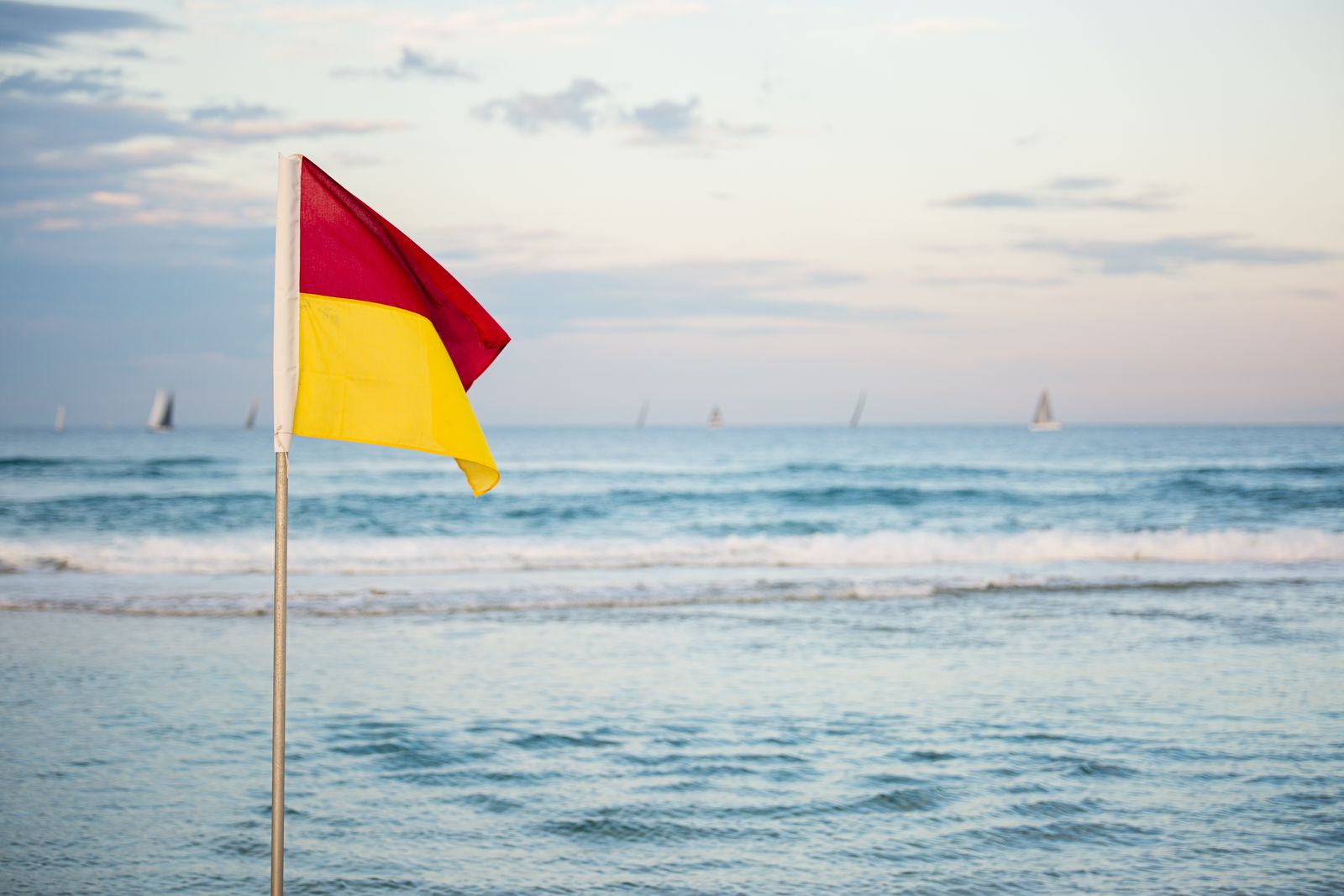
Flags change through the day as conditions shift. Check in the morning, check again after lunch, and when in doubt ask the lifeguard or the beach staff. That thirty-second conversation is the best free safety tool on the property.
What a rip current does, and how to get out of one
A rip current is a channel of water flowing away from the beach, out past the breaking waves. It won’t pull you under. It pulls you out, and it’s faster than you can swim against. The United States Lifesaving Association estimates rip currents kill more than 100 people a year on US beaches alone, and the same physics applies on every coast in Mexico.
You can often spot one before you’re in it: a gap in the line of breaking waves, a channel of churning or discolored water, or foam and seaweed moving steadily out to sea.
If you’re caught in one, don’t fight it. Stay calm and float. Swim parallel to the beach until you’re out of the channel, then angle back to shore. If you can’t break out, keep floating and wave for help. And if someone else is caught, don’t swim in after them. That’s how one drowning becomes two. Get a lifeguard, or throw something that floats.
Where the water runs rough, and where it stays calm
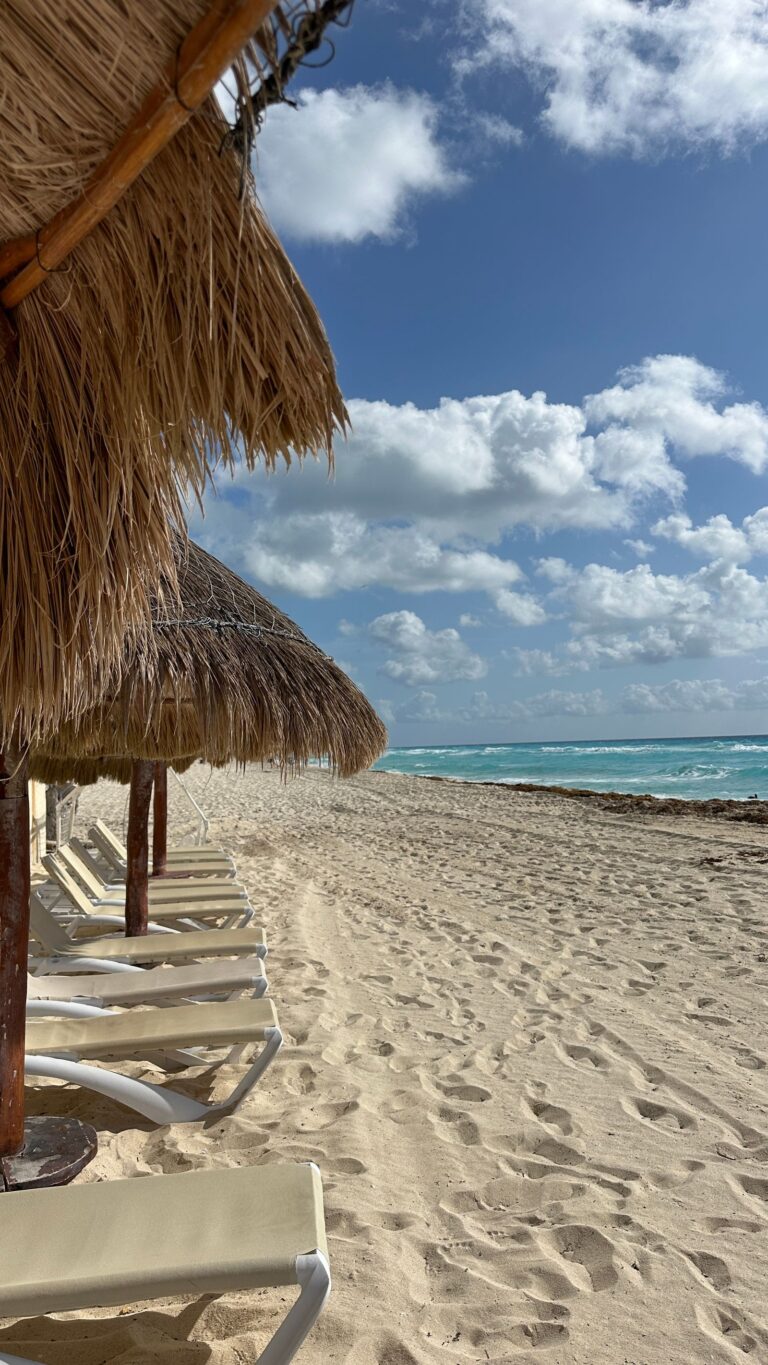
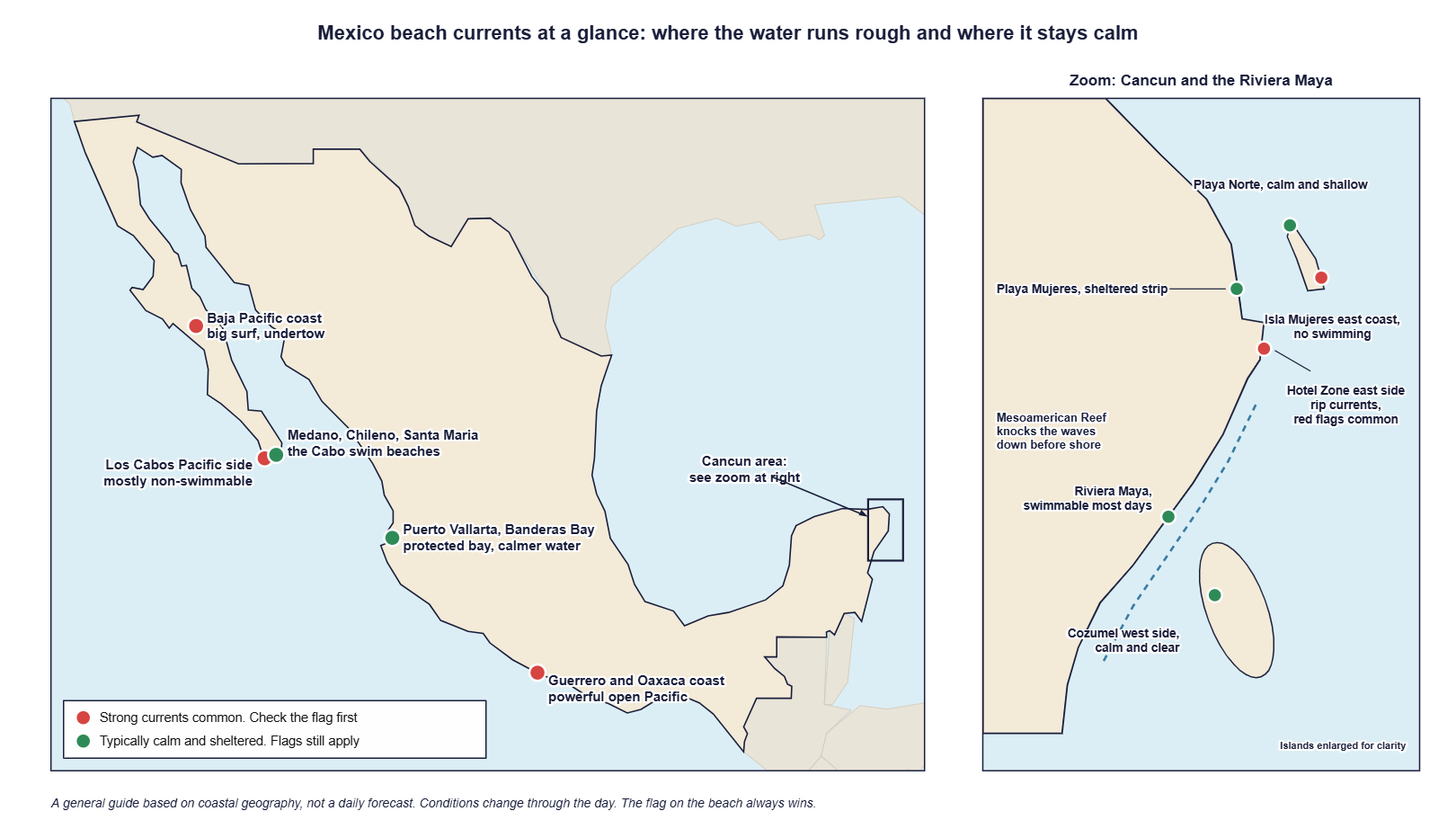
The pattern across Mexico is simple once you see it. Beaches that face the open ocean take the full force of it. Beaches with something standing in the way, a reef, an island, a sheltered bay, stay calm. Here’s the whole country at a glance.
The rough side
Cancun’s Hotel Zone is shaped like a 7, and the two sides behave very differently. The long east-facing stretch, roughly km 10 to km 20, takes the open Caribbean head-on. That includes Playa Delfines, the famous photo stop, which is beautiful and deceptively powerful, with rip currents forming in the gaps between sandbars. The short north-facing stretch near town, km 1 to 9, is much calmer. Playa Langosta sits behind a rocky breakwater and Playa Tortugas has some of the gentlest water in the Hotel Zone.
Isla Mujeres’ east coast faces the open Caribbean, and it’s rough, rocky, and not for swimming. Punta Sur and Playa Mascotas look dramatic, and that’s what they’re for. Looking, not swimming.
Los Cabos is the big one. Much of the coastline there, especially anything facing the open Pacific, has surf and undertow strong enough that the beaches are officially non-swimmable. Entire resorts operate with walk-only beaches. We covered one in our researched guide to Hyatt Ziva Los Cabos, where the ocean is scenery and the pools do the swimming.
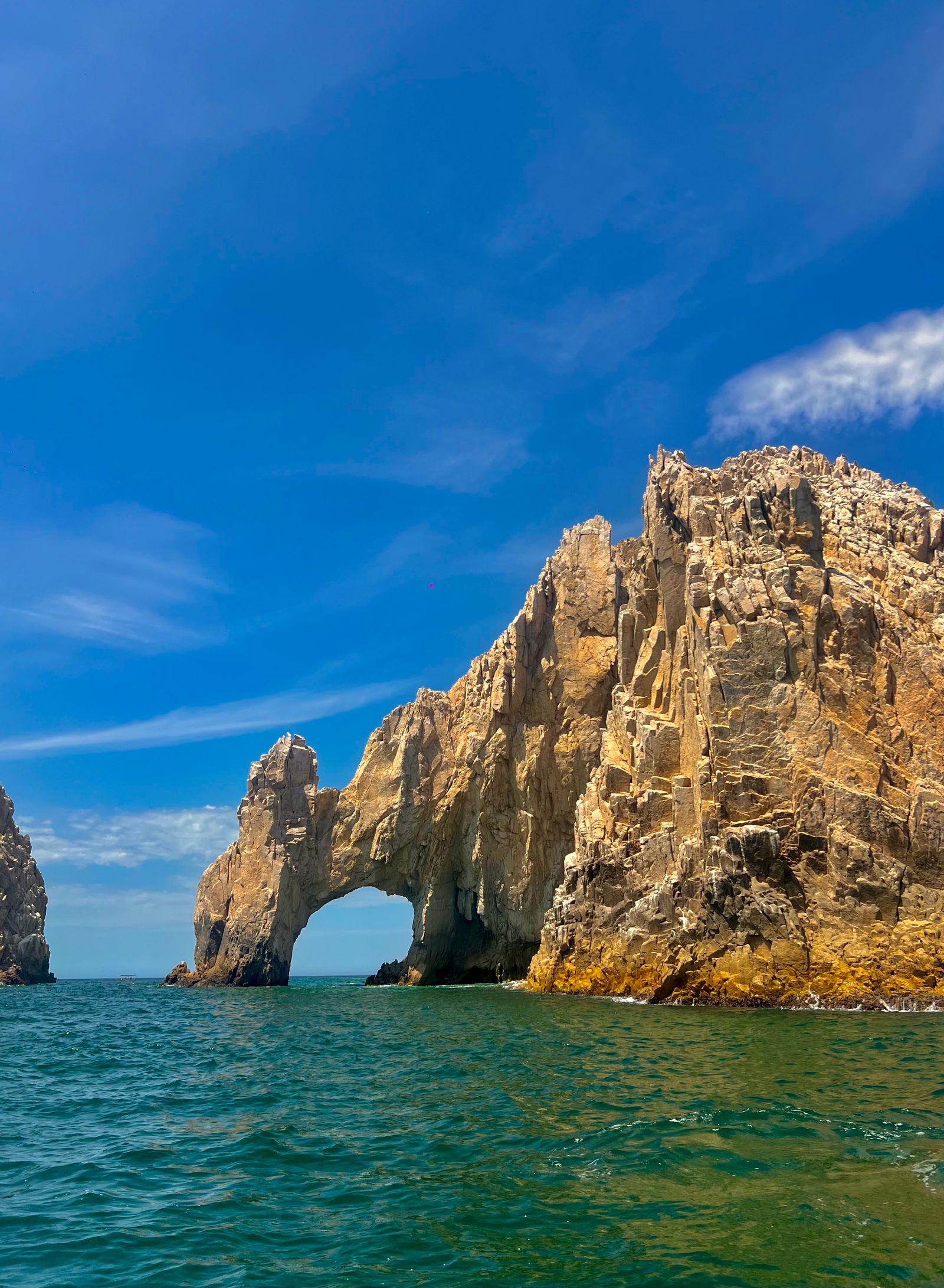
The Pacific coast in general runs bigger surf and stronger currents than the Caribbean side. The exception is a sheltered bay, which brings us to the good news.
Where you can actually swim
Plenty of Mexico’s coast is calm, and most of it is calm for the same reason: something is standing between the beach and the open sea.
Playa Norte on Isla Mujeres faces north and west, away from the open Caribbean, and stays shallow so far out you can wade for ages. It’s regularly rated the best swimming beach in the region. Playa Mujeres, the sheltered stretch north of Cancun, is similar, and it’s where you’ll find Dreams Playa Mujeres from our Mexico guides. Cozumel’s west coast faces the mainland instead of the open sea, so the water is calm and clear, which is why the snorkeling there is famous.
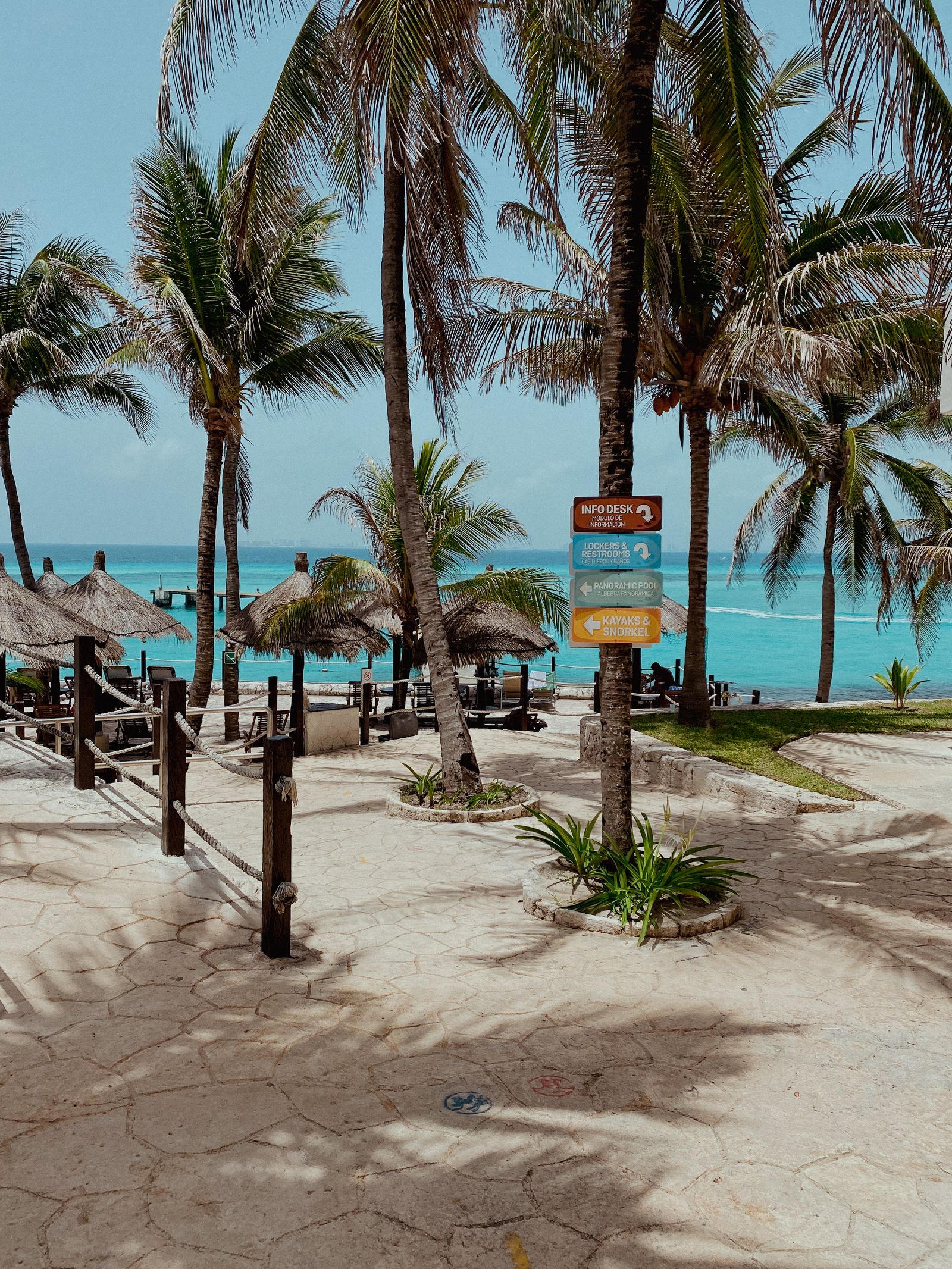
The Riviera Maya sits behind the Mesoamerican Reef, which knocks the waves down before they reach shore, so most beaches from Puerto Morelos through Playa del Carmen to Akumal are swimmable most days. Two of our researched guides sit on this coast: Valentin Imperial Riviera Maya and Hotel Xcaret México, which has calm swim coves built into the shoreline. One honest note for this coast: seasonal sargassum seaweed hits east-facing beaches hardest from spring through summer, so the water can be swimmable but not pretty.
In Los Cabos, the tourism board itself keeps a short list of swimmable beaches: Medano Beach in the bay at Cabo San Lucas, Chileno and Santa Maria in the Corridor, Playa Acapulquito near San José, and the Cabo Pulmo marine park. Puerto Vallarta sits inside Banderas Bay, which shelters it from the worst of the Pacific. And even in Cancun, six beaches hold Blue Flag certification for safety and water quality, including Playa Marlin and Playa Chac Mool.
Our beach rules for Mexico
Check the flag every single morning, and ask the beach staff what the water’s doing today. They know their stretch of sand better than any website, including this one.
Swim where there’s a lifeguard when you can. Outside the main beaches, coverage is thin, so never swim alone, keep kids within arm’s reach, and skip the ocean entirely after a few drinks. Alcohol is a factor in a large share of tourist swimming accidents in Mexico, and at an all-inclusive the next drink is never far away.
Respect a red flag even when other people are ignoring it, and treat a black flag as final. The water is closed. If a rip current takes you, float, swim parallel, then come in at an angle. And before any beach trip, make sure your travel insurance covers what you plan to do in the water.

The bottom line
Mexico has some of the best swimming beaches in the world and some beaches you should only photograph, and they can be twenty minutes apart. The difference is almost always what’s standing between the sand and the open sea. So decide what you want from the ocean before you book. If you want to float in calm water every afternoon, pick the sheltered coasts and the reef-protected stretches. If you’re happy with pools and a dramatic view, the wild beaches are spectacular. Either way, our Mexico resort guides tell you honestly which kind of beach you’re getting, because that’s the whole point of this site.
THE MONTHLY UPDATE
Get our newest resort ratings, once a month.
New guides, honest ratings and the gear we pack, straight to your inbox. Plus our free packing checklist.
No spam. Unsubscribe any time.